Lake Ouachita is the cleanest lake in the country and the largest lake entirely inside Arkansas — more than 40,000 acres of clear, blue water surrounded by the Ouachita National Forest, with over 200 islands scattered across it. Locals call it the Caribbean of Arkansas, and once you see the water, you will understand why. About 15 miles from downtown Hot Springs, it is the best full-day escape from the city.
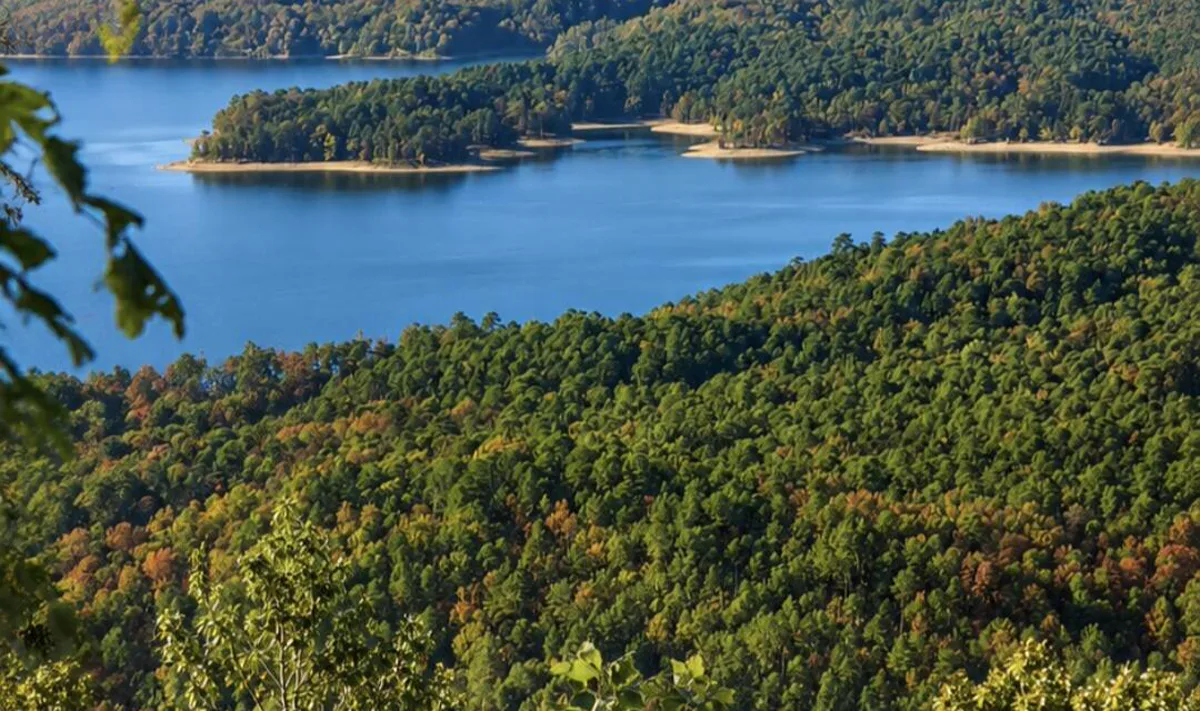
More than 40,000 acres of clear water in the Ouachita National Forest.
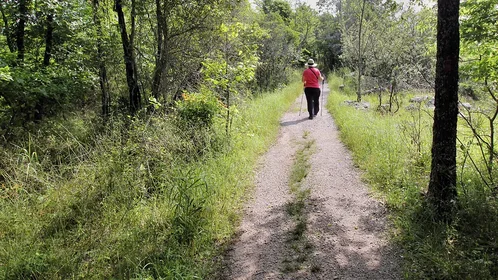
Long views over the water from the southern shore.
Start early — the lake is calmest in the morning, and the coves are empty. The easiest starting point is Lake Ouachita State Park, about 15 miles from Hot Springs.
A pontoon is the easiest choice for families: stable, roomy, and simple to drive. Cruise the open water, then tuck into a quiet cove to swim. The lake has 600 to 900 miles of shoreline depending on the water level, so it never feels crowded once you leave the marina behind.
The Lake Ouachita Vista Trail runs along the southern shore of the lake and offers long views over the water. It is a good way to see the lake from above without getting in a boat — and a dry-land break if you are not boating.
The lake is known for largemouth bass, striped bass, crappie, and catfish. Early morning and late afternoon are the best times. You will need an Arkansas fishing license, which you can buy online before your trip.
The lake has five designated swimming beaches, including one at the state park, and the water is warm enough from May — warmest in July and August. The clarity is also what makes the lake famous for scuba diving: at least 30 designated dive spots, with rock formations, a sunken forest, and even freshwater jellyfish and sponges.
The slower, closer way to experience the lake. The Rabbit Tail Water Trail is an 8.5-mile loop for paddlers, and the Buckville Water Trail is a 5.4-mile route — both good half-day paddles with places to stop. Stick to quiet coves on windy days or busy holiday weekends.
All of the lake's islands except Bird Island are open for free, primitive camping and day use. Hotel Island is the most popular, with soft sand, natural caves, and an unspoiled shoreline — arrive early if you want a quiet spot.
Sunscreen, hats, and plenty of water — there is very little shade on open water. Pack a cooler with food and drinks: there are few places to buy anything once you leave the marina.
Some shorelines are rocky, and water shoes make getting in and out of boats and kayaks much easier. A dry bag keeps phones, keys, and wallets safe.
The marina provides life jackets with rentals, and Arkansas law requires them on board. Children should wear them at all times. Bring a fishing license if you plan to fish, and a boating safety certificate if you were born after 1985 and plan to drive a motorboat.
Watch the sky, and head for shore if wind picks up. Strong winds can turn calm water rough in minutes on a big lake.
Arkansas requires a boating safety certificate for motorboat operators born after 1985 — kayaks, canoes, and paddleboards are exempt. Running a boat at night requires proper navigation lights, so plan your return accordingly.
The average depth is about 50 feet, and the maximum is over 400 feet — the deepest in Arkansas. Non-swimmers should stay in the designated swim areas and wear life jackets. Book rentals early: boats and kayaks at the state park marina go fast on summer weekends and holidays.
Late spring through early fall is lake season. May and September are the sweet spots — warm water, fewer crowds, and lower prices on rentals. July and August are the busiest and the hottest, and also when the water is at its best for swimming. Winter is quiet and beautiful in a different way, and the state park's bald eagle watch tours make it worth a cold-weather visit. And the lake sits under one of the darkest night skies in Arkansas, so if you stay past sunset — camping on an island or at the state park — the stars are extraordinary.